
Digital Marketing Guide: Your Blueprint for Online Success in 2026
Meta Title: Digital Marketing Guide: Proven Strategies for Business Growth
Meta Description: Master digital marketing with our comprehensive guide. Learn SEO, social media, content marketing & more to grow your business online. Expert tips from Growth Mindss.
In today’s fast-paced digital landscape, businesses cannot afford to ignore the power of online marketing. Whether you’re a startup founder, small business owner, or marketing professional, understanding digital marketing is no longer optional—it’s essential. This digital marketing guide will walk you through the fundamental strategies and techniques that can transform your online presence and drive measurable results for your brand.
Digital marketing encompasses all marketing efforts that use electronic devices or the internet. Businesses leverage digital channels such as search engines, social media platforms, email, and websites to connect with current and prospective customers. Unlike traditional marketing methods, digital marketing allows you to reach a global audience in a cost-effective, measurable way that enables personalized engagement at every stage of the customer journey.
Understanding the Core Components of Digital Marketing
The foundation of any successful digital marketing strategy rests on several key pillars. Search Engine Optimization (SEO) helps your website rank higher in search engine results, making it easier for potential customers to find you organically. Content marketing involves creating valuable, relevant content that attracts and engages your target audience while establishing your brand as an industry authority. Social media marketing leverages platforms like Facebook, Instagram, LinkedIn, and Twitter to build brand awareness and foster community engagement.
Pay-per-click advertising (PPC) allows you to display ads on search engines and other platforms, paying only when users click on your advertisements. Email marketing remains one of the most effective channels for nurturing leads and maintaining customer relationships through personalized communication. Analytics and data tracking enable you to measure campaign performance, understand customer behavior, and make informed decisions based on real-time insights.
Building Your Digital Marketing Strategy
Creating an effective digital marketing guide for your business starts with clearly defining your goals and understanding your target audience. Begin by identifying what you want to achieve—whether it’s increasing brand awareness, generating leads, boosting sales, or improving customer retention. Your objectives should be specific, measurable, achievable, relevant, and time-bound (SMART goals).
Research your target audience thoroughly to understand their demographics, interests, pain points, and online behavior. Create detailed buyer personas that represent your ideal customers, including information about their challenges, motivations, and preferred communication channels. This understanding will inform every aspect of your digital marketing efforts, from content creation to platform selection.
Conduct a comprehensive audit of your current digital presence by analyzing your website performance, social media engagement, search engine rankings, and competitor strategies. Identify gaps and opportunities that can help you stand out in your market. Choose the digital marketing channels that align best with your audience preferences and business objectives, remembering that quality often trumps quantity when it comes to platform selection.
Content Creation and SEO Best Practices
Content is the fuel that powers your digital marketing engine. High-quality, relevant content attracts visitors, engages audiences, and converts prospects into customers. Develop a content calendar that outlines what you’ll publish, when, and on which platforms. Mix different content types including blog posts, videos, infographics, podcasts, and case studies to keep your audience engaged and cater to different consumption preferences.
Optimize your content for search engines by conducting keyword research to identify terms your target audience is searching for. Incorporate these keywords naturally throughout your content, including in titles, headings, meta descriptions, and body text. Focus on creating comprehensive, valuable content that truly answers user questions rather than simply stuffing keywords. Search engines increasingly prioritize user experience and content quality over keyword density alone.
Ensure your website is technically sound with fast loading speeds, mobile responsiveness, secure HTTPS protocol, and clear site architecture. Build quality backlinks from reputable websites in your industry to boost your domain authority. Regularly update your content to keep it fresh and relevant, as search engines favor websites that consistently provide current information.
Leveraging Social Media and Paid Advertising
Social media platforms offer unprecedented opportunities to connect with your audience, build brand loyalty, and drive traffic to your website. Choose platforms where your target audience is most active rather than trying to maintain a presence everywhere. Develop a consistent posting schedule and create engaging content that encourages interaction through comments, shares, and likes.
Use social listening tools to monitor conversations about your brand, industry, and competitors. Engage authentically with your followers by responding to comments, addressing concerns, and participating in relevant discussions. Consider incorporating user-generated content and influencer partnerships to expand your reach and build credibility.
Paid advertising through platforms like Google Ads, Facebook Ads, and LinkedIn Ads can accelerate your results by putting your brand in front of highly targeted audiences. Start with a clear budget and test different ad formats, targeting options, and messaging to identify what resonates best with your audience. Use retargeting campaigns to re-engage visitors who have previously interacted with your website or content.
Measuring Success and Continuous Improvement
The beauty of digital marketing lies in its measurability. Use analytics tools like Google Analytics, social media insights, and marketing automation platforms to track key performance indicators (KPIs) relevant to your goals. Monitor metrics such as website traffic, conversion rates, bounce rates, email open rates, social engagement, and return on investment (ROI).
Regularly review your performance data to identify trends, successes, and areas for improvement. Conduct A/B testing on your landing pages, email subject lines, ad copy, and call-to-action buttons to optimize conversion rates. Stay informed about digital marketing trends, algorithm updates, and emerging technologies that could impact your strategy.
Remember that digital marketing is not a set-it-and-forget-it endeavor. The digital landscape evolves constantly, requiring marketers to adapt their strategies accordingly. Invest in ongoing education through industry blogs, webinars, courses, and conferences to stay ahead of the curve and maintain your competitive edge.
At Growth Mindss, we understand that navigating the complex world of digital marketing can feel overwhelming. This digital marketing guide provides the foundation you need to build a robust online presence, but success requires consistent effort, experimentation, and refinement. Start with the basics, measure your results, learn from your data, and don’t be afraid to adjust your approach as you discover what works best for your unique business and audience.
Frequently Asked Questions
1. What is the most important component of digital marketing for beginners?
For beginners, focusing on a strong website foundation combined with content marketing and basic SEO is crucial. Your website serves as your digital headquarters, while quality content attracts visitors and establishes your expertise. Master these fundamentals before expanding to more complex channels like paid advertising or advanced social media strategies.
2. How much should a small business budget for digital marketing?
Small businesses typically allocate between 7-12% of their revenue to marketing, with a significant portion dedicated to digital channels. However, the exact amount depends on your industry, goals, and growth stage. Start with what you can afford, track your ROI carefully, and reinvest profits from successful campaigns to scale your efforts over time.
3. How long does it take to see results from digital marketing efforts?
The timeline varies significantly by channel and strategy. Paid advertising can generate immediate traffic, while SEO typically takes 3-6 months to show significant results. Social media growth and email list building require consistent effort over several months. Set realistic expectations and focus on both quick wins and long-term strategies for sustainable growth.
4. Do I need to be on every social media platform?
No, quality trumps quantity in social media marketing. It’s better to maintain an active, engaging presence on 2-3 platforms where your target audience spends time than to spread yourself thin across every network. Research where your ideal customers are most active and focus your efforts there for maximum impact.
5. Can I handle digital marketing myself or should I hire professionals?
This depends on your budget, time availability, and expertise. Many small businesses successfully manage basic digital marketing in-house by learning fundamentals and using user-friendly tools. However, as your business grows or if you need specialized skills like technical SEO or advanced analytics, partnering with experienced professionals can provide better ROI and free up your time to focus on core business activities.
Suggested Image Descriptions for Paragraphs
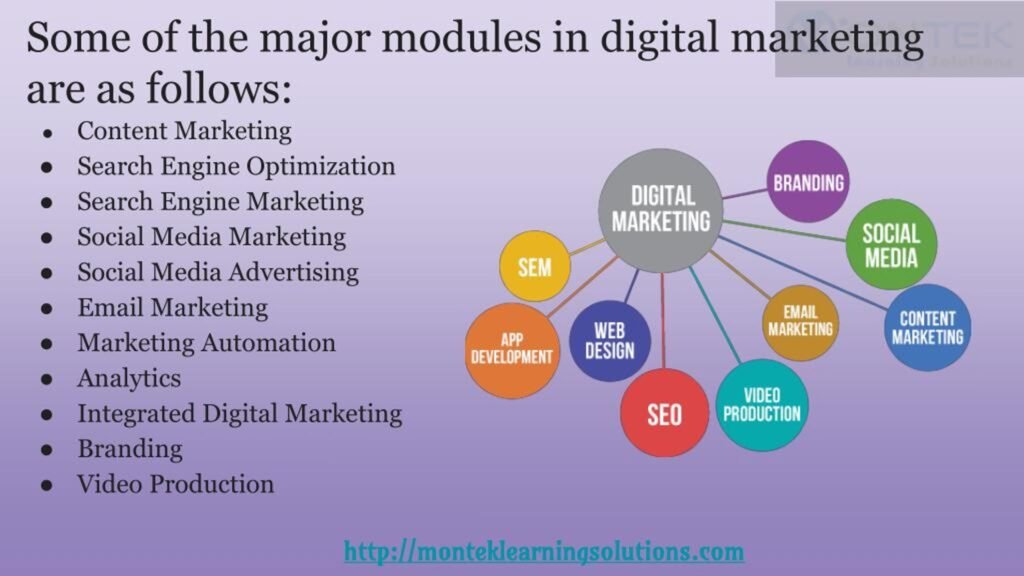
Image 1 (After “Understanding the Core Components” section): An infographic-style illustration showing interconnected digital marketing channels including a search engine icon, social media symbols, email envelope, content document, analytics graph, and mobile device, all connected by flowing lines to represent an integrated digital marketing ecosystem.
Image 2 (After “Content Creation and SEO Best Practices” section): A modern workspace scene showing a laptop displaying analytics dashboards, surrounded by a notebook with content planning notes, a smartphone showing social media engagement, and a coffee cup, representing the strategic planning aspect of digital marketing execution
