
AI: Revolutionizing Industries from Factory Floors to Financial Fortresses. The whispers of artificial intelligence are no longer confined to the hushed halls of research labs; they’ve erupted into a chorus, resonating through the very foundations of global industries. From the meticulous precision of manufacturing lines to the intricate dance of financial markets, AI is not just a tool; it’s a transformative force, reshaping operational paradigms and redefining the future of work itself. This isn’t a fleeting trend; it’s a fundamental shift, akin to the industrial revolution, but powered by algorithms and data rather than steam and steel.
The journey of AI integration, particularly in the industrial and banking sectors, is a fascinating narrative of innovation meeting necessity. In an increasingly competitive global landscape, businesses are relentlessly seeking efficiencies, predictive insights, and enhanced customer experiences. AI, with its capacity for rapid data processing, pattern recognition, and autonomous decision-making, has emerged as the quintessential enabler of these ambitions. It’s about working smarter, not just harder, and leveraging technology to unlock unprecedented levels of productivity and insight.
Revolutionizing Industries from Factory Floors to Financial Fortresses: Industrial AI: Precision, Prediction, and Unseen Efficiencies
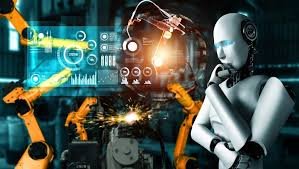
Step into a modern manufacturing plant, and you might be surprised by the symphony of interconnected systems, all humming with the quiet power of AI. Here, AI isn’t about replacing human workers wholesale but augmenting their capabilities, taking over repetitive, dangerous, or highly complex tasks that benefit from machine precision. Think of predictive maintenance, where AI algorithms analyze real-time sensor data from machinery to anticipate potential failures long before they occur. This proactive approach dramatically reduces downtime, extends equipment lifespan, and slashes maintenance costs. It’s a game-changer for industries where even a few hours of unexpected halt can translate into millions in losses.
Beyond maintenance, AI is optimizing entire production processes. From quality control systems that can detect microscopic flaws at lightning speed to robotic arms guided by computer vision for intricate assembly, AI ensures consistent excellence. Supply chain management is another area profoundly impacted. AI can analyze vast datasets of market trends, weather patterns, and geopolitical events to forecast demand with remarkable accuracy, optimizing inventory levels and logistics routes. This leads to leaner operations, reduced waste, and a more responsive supply chain, crucial in today’s fast-paced global economy. The industrial sector is witnessing a renaissance, driven by the intelligent automation and data-driven insights that AI provides, leading to factories that are not just automated but truly intelligent.
Revolutionizing Industries from Factory Floors to Financial Fortresses Banking AI: Fortifying Security and Personalizing Experiences
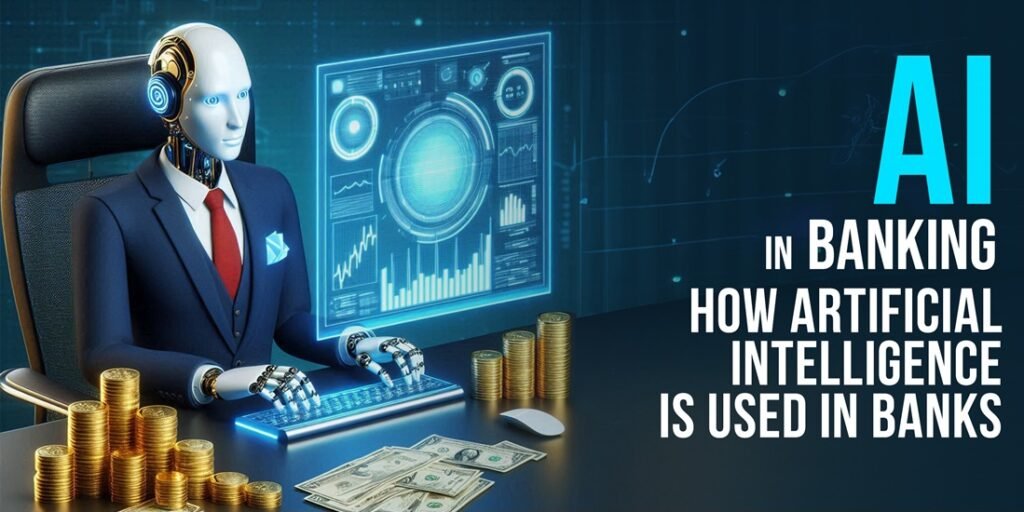
In the intricate world of finance, trust, security, and personalized service are paramount. AI is proving to be an invaluable ally in all these areas. One of the most critical applications is in fraud detection and cybersecurity. With billions of transactions occurring daily, manually sifting through data for anomalies is an impossible task. AI algorithms, however, can analyze transactional patterns in real-time, flagging suspicious activities that deviate from established norms, effectively acting as an omnipresent digital guardian. This significantly reduces financial losses due to fraud and enhances customer confidence.
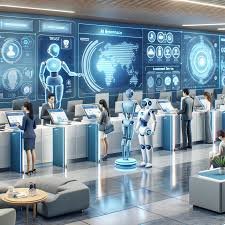
Beyond security, AI is revolutionizing customer experience in banking. Chatbots and virtual assistants powered by natural language processing (NLP) provide instant customer support, answering queries, processing requests, and guiding users through complex financial processes 24/7. This frees up human agents to focus on more complex issues, leading to improved service quality and reduced wait times. Furthermore, AI-driven analytics allow banks to gain a deeper understanding of individual customer needs and preferences. This enables the creation of highly personalized financial products, investment advice, and marketing campaigns, fostering stronger customer relationships and driving business growth. The era of generic banking is fading, replaced by a hyper-personalized financial landscape sculpted by AI.
Risk management, a cornerstone of banking, is also being transformed. AI models can analyze vast amounts of market data, economic indicators, and geopolitical events to assess credit risk more accurately, predict market volatility, and identify potential systemic risks. This allows financial institutions to make more informed lending decisions and develop more robust risk mitigation strategies, contributing to a more stable and resilient financial system. The digital transformation of banking, propelled by AI, is creating a future where financial services are more secure, efficient, and tailored to the individual.
The Human Element and the Future Ahead
While AI brings undeniable advantages, it’s crucial to acknowledge the evolving role of the human element. The fear of widespread job displacement often overshadows the reality of job transformation. AI automates tasks, but it also creates new roles requiring skills in AI development, deployment, maintenance, and ethical oversight. The future workforce will likely involve a symbiotic relationship between humans and AI, where AI handles the data crunching and repetitive tasks, allowing humans to focus on creativity, critical thinking, strategic planning, and complex problem-solving. Education and reskilling initiatives will be vital to ensure a smooth transition and empower individuals to thrive in this AI-driven era.
Looking ahead, the potential for AI in both industrial and banking sectors is virtually limitless. We can anticipate even more sophisticated predictive models, fully autonomous operations in specific industrial contexts, and highly intuitive, proactive financial services that anticipate customer needs before they even arise. The ethical considerations surrounding AI, such as data privacy, algorithmic bias, and accountability, will also continue to be central to its responsible development and deployment. Navigating these challenges while harnessing AI’s immense potential will be the defining task for leaders and innovators in the coming decades. The journey has just begun, and the landscape of both industrial production and financial services is set to be continually reshaped by the intelligent hand of AI.