
Digital Marketing Strategies That Actually Work in 2026
Meta Title: Digital Marketing Strategies for Business Growth Minds
Meta Description: Discover proven digital marketing strategies to grow your business online. Expert tips on SEO, social media, content marketing & more from Growth Minds.
The landscape of online business has transformed dramatically over the past few years, and understanding effective digital marketing strategies has become essential for any brand looking to thrive. Whether you’re a startup or an established company, mastering the art of reaching your target audience through digital channels can make the difference between stagnation and exponential growth.
Digital marketing strategies encompass a wide range of tactics designed to connect businesses with their customers where they spend most of their time—online. we’ve witnessed firsthand how the right approach can elevate a brand from obscurity to market leadership. The key lies not in implementing every tactic available, but in choosing the ones that align with your business goals and audience preferences.
Understanding Your Digital Foundation
Before diving into specific tactics, you need to establish a solid foundation. This begins with understanding your target audience on a deeper level. Who are they? What problems do they face? Where do they consume content? These questions form the backbone of any successful digital marketing strategy. When you know your audience intimately, you can craft messages that resonate and choose platforms where your efforts will yield the highest returns.
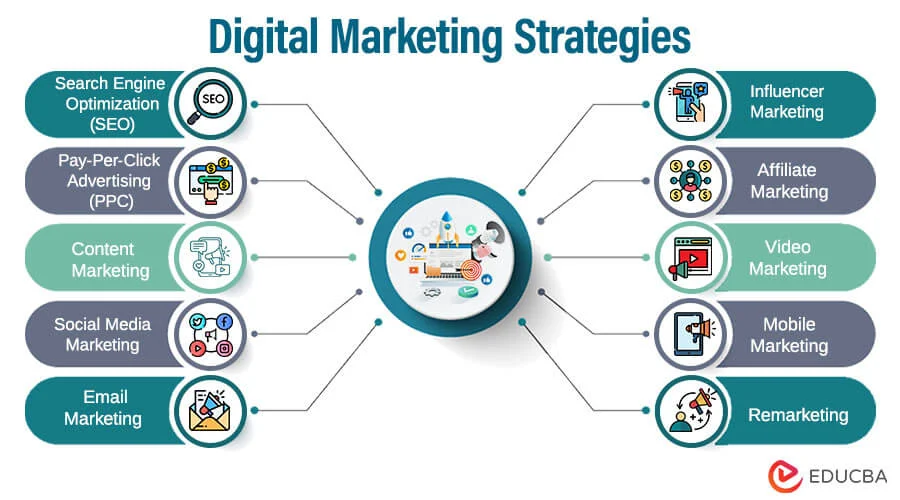
Your website serves as your digital headquarters and optimizing it for both users and search engines is paramount. Search engine optimization remains one of the most cost-effective digital marketing strategies available. By creating valuable content around relevant keywords and ensuring your site’s technical health, you attract organic traffic that converts at higher rates than many paid channels. The beauty of SEO lies in its compounding nature—the work you do today continues paying dividends months and years down the line.
[Image 1: A modern workspace showing a laptop with analytics dashboard, smartphone, and notebook with “Digital Marketing Strategy” written on it, surrounded by coffee and plants – representing strategic planning]
Content Marketing: The Heart of Connection
Content marketing forms the core of most successful digital marketing strategies. This approach involves creating and distributing valuable, relevant content to attract and retain a clearly defined audience. Instead of directly pitching your products or services, you provide genuinely useful information that solves problems or entertains. Blog posts, videos, podcasts, infographics, and social media updates all fall under this umbrella.
The power of content marketing extends beyond immediate conversions. It builds trust, establishes authority, and keeps your brand top-of-mind. When someone searches for information related to your industry, appearing in those results positions you as an expert. Over time, this trust translates into customer loyalty and advocacy. The key is consistency—publishing high-quality content regularly signals to both search engines and potential customers that you’re active and engaged.
Social media platforms offer unprecedented opportunities to engage directly with your audience. Each platform attracts different demographics and supports different content types, so your digital marketing strategies should account for these nuances. LinkedIn works exceptionally well for B2B companies, while Instagram and TikTok dominate in lifestyle and consumer products. The mistake many businesses make is trying to be everywhere at once. Instead, identify where your audience congregates and focus your energy there.
Paid Advertising and Email Marketing
While organic strategies build long-term value, paid advertising delivers immediate results. Pay-per-click campaigns on Google, social media ads, and display advertising allow you to reach specific audiences with precision. The advantage of digital advertising over traditional media is measurability—you can track every dollar spent and adjust campaigns in real-time based on performance. Smart businesses use paid ads to complement their organic efforts, amplifying content that’s already performing well.
Email marketing remains one of the highest-ROI digital marketing strategies available. Despite predictions of its demise, email continues to deliver exceptional results when done correctly. The key is permission-based lists and personalized content. Segmenting your audience and sending targeted messages based on their behavior and preferences dramatically improves open rates and conversions. Automation tools allow you to nurture leads systematically, moving them through your sales funnel without constant manual intervention.
[Image 2: A collage showing various digital marketing channels – social media icons, email newsletter on tablet, mobile phone with ads, and analytics graphs – representing multi-channel marketing approach]
Analytics and Continuous Improvement
No digital marketing strategies discussion is complete without addressing analytics. The data available to modern marketers is staggering, and learning to interpret this information separates successful campaigns from mediocre ones. Tools like Google Analytics, social media insights, and marketing automation platforms provide detailed information about what’s working and what isn’t. Regular analysis allows you to double down on successful tactics and eliminate wasteful spending.
The digital landscape evolves constantly, with new platforms emerging and algorithms changing regularly. What worked brilliantly last year might deliver diminishing returns today. Successful businesses view digital marketing strategies as living documents that require regular review and adjustment. Stay informed about industry trends, test new approaches, and always prioritize your audience’s needs over flashy new tactics.
Video content has exploded in recent years and shows no signs of slowing. Whether through short-form content on TikTok and Instagram Reels or longer YouTube videos, audiences crave visual storytelling. Incorporating video into your digital marketing strategies can significantly boost engagement and conversion rates. The barrier to entry has never been lower—smartphones can capture professional-quality footage, and editing apps make production accessible to everyone.
Building a successful online presence requires patience and persistence. Digital marketing strategies deliver compounding returns, meaning your efforts build upon each other over time. The website that ranks on page five today could reach the first page in six months with consistent optimization. The social media following that starts with dozens can grow into thousands through regular, valuable engagement. Success belongs to those who commit to the long game while remaining flexible enough to adapt when needed.
Frequently Asked Questions
1. What are the most cost-effective digital marketing strategies for small businesses?
Content marketing and SEO typically offer the best return on investment for small businesses. Creating valuable blog posts, optimizing your website for search engines, and engaging authentically on social media require more time than money. Email marketing also delivers exceptional ROI once you’ve built a subscriber list. These organic strategies build sustainable growth without requiring large advertising budgets.
2. How long does it take to see results from digital marketing strategies?
SEO and content marketing typically require three to six months before showing significant results, as search engines need time to index content and build authority. Paid advertising can deliver immediate traffic and conversions. Social media growth varies widely but generally requires consistent posting for several months. The key is maintaining realistic expectations and committing to sustained effort rather than expecting overnight success.
3. Should I focus on one digital marketing channel or use multiple strategies?
A multi-channel approach typically performs best, as different tactics reinforce each other. However, if resources are limited, start with one or two channels where your audience is most active and do them exceptionally well. Once you’ve mastered those, expand gradually. Quality execution on fewer channels beats mediocre presence everywhere.
4. How do I measure the success of my digital marketing strategies?
Define clear key performance indicators (KPIs) aligned with your business goals. Common metrics include website traffic, conversion rates, cost per acquisition, email open rates, social engagement, and ultimately revenue generated. Use analytics tools to track these metrics consistently and compare performance over time. Focus on metrics that directly impact your bottom line rather than vanity metrics like follower counts.
5. How often should I update my digital marketing strategies?
