
By [Your Name] | February 2026
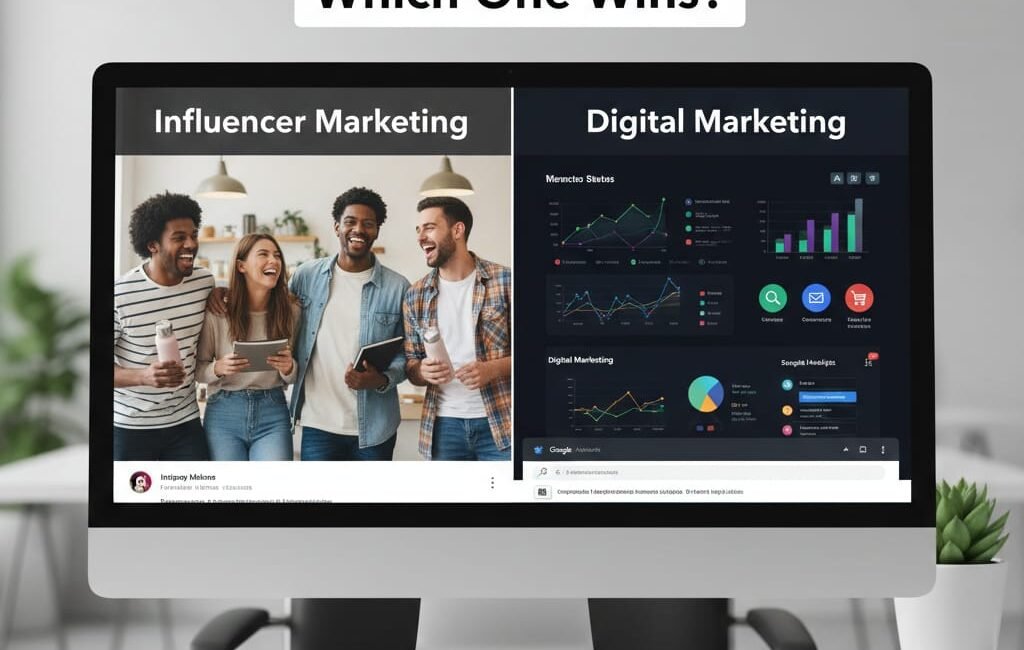
Two buzzwords dominate nearly every marketing conversation today: influencer marketing and digital marketing. Brands throw both terms around freely, sometimes interchangeably — but they’re not the same thing, and confusing them can lead to misallocated budgets, blurry strategies, and missed opportunities.
So let’s settle it once and for all. What exactly is the difference between influencer marketing and digital marketing? Which one delivers better results? And in 2026, how do the smartest brands use both?
Defining Digital Marketing
Digital marketing is the umbrella. It encompasses every marketing effort that lives online or uses digital technology to reach an audience. That includes:
- Search Engine Optimization (SEO)
- Pay-Per-Click Advertising (Google Ads, Bing Ads)
- Social Media Marketing (organic posts, paid ads)
- Email Marketing
- Content Marketing (blogs, videos, podcasts)
- Affiliate Marketing
- Display Advertising (banners, retargeting ads)
- Influencer Marketing
Yes, you read that right. Influencer marketing is technically a subset of digital marketing. But in practice, it has grown so large, so specialized, and so culturally distinct that it deserves to be discussed — and understood — on its own terms.
Defining Influencer Marketing
Influencer marketing is the practice of partnering with individuals who have built a dedicated, engaged audience on social platforms — and leveraging their credibility, personality, and reach to promote a brand, product, or service.
The key word here is trust. An influencer’s power doesn’t come from a big budget or a polished ad creative. It comes from the relationship they’ve built with their followers over months or years. When a creator recommends something, their audience listens — not because they were paid to listen, but because they genuinely trust the person speaking.https://growthmindss.com/social-media-marketing-in-2026/
Influencer marketing spans a wide spectrum, from mega-influencers with tens of millions of followers to nano-influencers with just a few thousand hyper-engaged fans in a specific niche.
Key Differences: Influencer Marketing vs. Digital Marketing
1. Scope and Scale
Digital marketing is the entire ocean. Influencer marketing is one powerful current within it. Digital marketing includes technical disciplines like SEO, programmatic advertising, and email automation — areas entirely separate from influencer partnerships. Influencer marketing, on the other hand, is focused exclusively on human-to-human credibility and social reach.
2. Who Delivers the Message
In most forms of digital marketing, the brand controls the message. The brand writes the ad copy, designs the creative, sets the tone, and decides exactly what gets said. In influencer marketing, the message is largely delivered — and often created — by the influencer. This shift of creative control is both the biggest strength and the biggest challenge of influencer marketing.
3. Trust and Authenticity
A Google search ad or a banner ad is immediately recognized as advertising. People have built up strong ad-blindness to traditional digital formats. Influencer content, when done well, feels like a genuine recommendation from a friend. This is why influencer marketing tends to generate higher engagement rates and stronger purchase intent — particularly among younger audiences who distrust corporate messaging.
4. Targeting Approach
Digital marketing relies on algorithmic and data-driven targeting — cookies, behavioral signals, demographics, and lookalike audiences. Influencer marketing targets through community alignment. You pick an influencer whose audience mirrors your ideal customer. It’s less granular than programmatic targeting but often more emotionally resonant.
5. Content Creation
In digital marketing, brands typically create content in-house or through agencies. In influencer marketing, the influencer IS the content creator. You’re not just buying reach — you’re buying creativity, voice, and storytelling. This makes influencer marketing a unique hybrid of media buying and content production.
6. Measurement and ROI
Digital marketing is measurable with precision — click-through rates, conversion rates, cost-per-acquisition, ROAS (Return on Ad Spend). The numbers are clear and comparable. Influencer marketing has historically been harder to measure, though in 2026 this gap is closing fast. Affiliate links, promo codes, UTM parameters, and platform-native analytics now give brands far better visibility into influencer-driven conversions.
7. Cost Structure
Digital marketing costs are often performance-based (you pay per click, per impression, or per conversion). Influencer marketing is typically a flat fee or gifting arrangement, often with no direct performance guarantee. The cost varies wildly — a nano-influencer might post for a free product, while a top-tier celebrity influencer might charge hundreds of thousands of dollars per post.
8. Longevity of Content
An influencer post or YouTube video can live on search results and feeds for months or years, continuing to generate awareness and traffic long after the campaign ends. A paid digital ad stops the moment you stop paying for it.
Types of Influencers: Not All Are Equal
Understanding influencer marketing means understanding the tier system:
Nano-influencers (1K–10K followers): Highly niche, deeply trusted, incredibly high engagement. Perfect for local brands, specialized products, and community-driven campaigns. Affordable and authentic.
Micro-influencers (10K–100K followers): The sweet spot for most brands in 2026. Strong niche authority, solid engagement, and more affordable than macro tiers. Often deliver the best ROI.
Macro-influencers (100K–1M followers): Broader reach, strong recognition, but lower engagement rates relative to their follower count. Good for brand awareness campaigns.
Mega-influencers and celebrities (1M+ followers): Massive reach, but also massive cost and often lower engagement. Best suited for established brands with big budgets seeking mass awareness.
Strengths and Weaknesses Side by Side
Digital Marketing
Strengths: Highly measurable, scalable, diverse channel mix, brand controls the message, works for almost every budget, long-term compounding returns (especially SEO and content).
Weaknesses: Ad fatigue and banner blindness are real. Consumers have become skilled at ignoring ads. Rising cost-per-click in competitive industries. Requires significant technical expertise to execute well.
Influencer Marketing
Strengths: High trust and authenticity, strong purchase intent, built-in content creation, access to niche communities that are hard to reach through ads, human storytelling at scale.
Weaknesses: Less precise targeting, harder to measure directly (though improving), risk of brand-influencer misalignment, potential for controversy if an influencer behaves badly, requires careful vetting and relationship management.
The Impact of Influencer Marketing in 2026
AI-Matched Influencer Discovery
Finding the right influencer used to require hours of manual research. In 2026, AI-powered platforms analyze audience demographics, engagement authenticity, content themes, and brand alignment to recommend ideal influencer partners in minutes. Fake followers and inflated metrics are increasingly detectable, making influencer selection far more reliable.
The Nano and Micro Revolution
Brands have largely shifted away from chasing celebrity mega-influencers toward building networks of micro and nano-influencers. The ROI math is simply better — higher engagement, lower cost, more authentic content, and audiences that genuinely care about the niche. A beauty brand might partner with 200 micro-influencers instead of one celebrity, creating a distributed campaign with deeper cultural penetration.
Long-Term Creator Partnerships
One-off sponsored posts are giving way to long-term brand ambassador relationships. Brands in 2026 are treating their best-performing influencers like strategic partners — co-creating products, giving them early access, and building multi-year relationships. These partnerships generate compounding trust and credibility.
Performance-Based Influencer Deals
The industry has matured. More brands are structuring influencer deals with performance components — affiliate commissions, sales bonuses, and conversion tracking. Influencers who can demonstrate real business impact command premium rates. Those who can’t are losing deals to creators with cleaner attribution.
Virtual and AI Influencers
One of the most fascinating developments of 2026 is the continued rise of virtual influencers — AI-generated personas with millions of followers. Brands love them for their total controllability and zero controversy risk. Audiences are more divided, though younger digital natives often engage with virtual creators without batting an eye.
Creator-Led Brands
The lines between influencer and brand are dissolving. In 2026, the most powerful influencers don’t just promote other people’s products — they launch their own. Creator-led brands are disrupting traditional consumer goods categories, using their built-in audiences to launch products with zero traditional marketing spend. This is influencer marketing turned completely inside out.
Which One Should Your Brand Choose?
The honest answer is: both, strategically integrated.
Digital marketing provides the infrastructure, the data, the precision, and the scalability. It ensures your brand is discoverable on search engines, retargeting website visitors, and converting warm audiences through email. These are non-negotiable foundations.
Influencer marketing provides the human layer — the trust, the storytelling, the community access, and the cultural relevance that no algorithm can manufacture. It amplifies brand perception in ways that a well-targeted ad simply cannot.
The best marketing strategies in 2026 don’t pit these two against each other. They use digital marketing to build the funnel and influencer marketing to build the bridge — converting strangers into believers by putting your brand in the voice of someone they already trust.
A Practical Framework
Here’s a simple way to think about it:
If your primary goal is performance and conversion — driving traffic, generating leads, selling products efficiently at scale — lean on digital marketing channels like SEO, paid search, and email.
If your primary goal is awareness, trust, and community — entering a new market, building brand affinity, reaching a niche audience authentically — lean on influencer marketing.
If your goal is growth at all levels of the funnel — invest in both, with digital marketing providing measurable ROI and influencer marketing providing cultural credibility.
Final Thoughts
Influencer marketing and digital marketing are not rivals. One is a vast discipline; the other is one of its most powerful and human expressions. The mistake brands make is treating influencer marketing as a shortcut to virality or digital marketing as a cold, mechanical numbers game.
In 2026, the most successful marketers understand that behind every click, every conversion, and every follower is a real human being making decisions based on trust, relevance, and emotion. Digital marketing helps you reach them. Influencer marketing helps you move them.
Master both, and you don’t just market to people. You build a brand that people genuinely want to be part of.
Are you already using influencer marketing alongside your digital strategy? Share your experience in the comments — we’d love to hear what’s working for you in 2026.
