
By [Your Name] | February 2026
Marketing has never stood still. From painted billboards to prime-time TV commercials, brands have always chased audiences wherever attention lives. But the arrival and dominance of social media didn’t just add a new channel to the mix — it fundamentally rewired the rules of engagement. In 2026, that gap between social media marketing and traditional marketing is wider, more consequential, and more interesting than ever.
What Is Traditional Marketing?
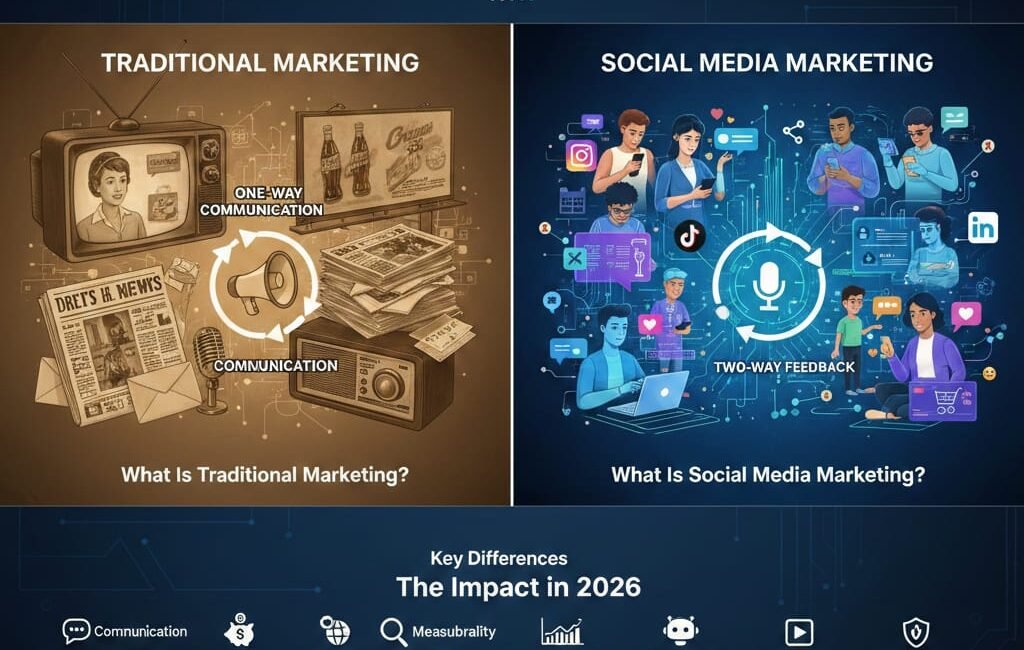
Traditional marketing refers to any promotional activity that operates through conventional, offline channels. Think television commercials, radio spots, print ads in newspapers and magazines, billboards, direct mail, and event sponsorships. It’s the kind of marketing that ran the world for most of the 20th century and still commands significant budgets today.
The defining characteristic of traditional marketing is that it’s one-way communication. A brand crafts a message, pushes it out through a broadcast medium, and hopes it lands with the right audience. The relationship is largely passive — the consumer receives, but rarely responds.
What Is Social Media Marketing?
Social media marketing is the practice of using platforms like Instagram, YouTube, TikTok, LinkedIn, X (formerly Twitter), and emerging AI-powered social networks to build brand awareness, drive engagement, and convert followers into customers.
Unlike its traditional counterpart, social media marketing is inherently conversational. The audience doesn’t just consume content — they comment, share, remix, challenge, and co-create it. Brands are no longer broadcasters; they’re participants in an ongoing, public dialogue.
Key Differences: Social Media vs. Traditional Marketing
1. Communication Flow
Traditional marketing speaks at people. Social media marketing speaks with them. A television ad runs its 30 seconds and the conversation ends. A social media post invites replies, reactions, duets, and debates that can last for days and reach audiences the brand never intended to reach.
2. Cost and Accessibility
Running a prime-time TV commercial or a full-page newspaper ad requires a substantial budget — often tens of thousands of dollars before a single person sees it. Social media, by contrast, has dramatically democratized marketing. A creator with a smartphone, a compelling idea, and zero budget can reach millions. Even paid social advertising allows hyper-targeted campaigns at a fraction of traditional costs.
3. Targeting Precision
Traditional marketing targets broadly. You buy a slot during a sports game because you assume sports fans might want your product. Social media platforms, powered by behavioral data and AI algorithms, allow marketers to target by age, location, interests, purchase history, look-alike audiences, and more. In 2026, this targeting has become even more granular, with AI-driven audience modeling that would have seemed like science fiction a decade ago.
4. Measurability and Real-Time Analytics
Ask a traditional marketer how many people genuinely engaged with their billboard — they’ll give you an estimate. Ask a social media marketer how many people watched their video for more than 10 seconds, clicked a link, shared it, or converted to a paying customer — they’ll pull up a dashboard with near-real-time data. The accountability and measurement available in social media marketing is simply without precedent.
5. Content Lifespan
A newspaper ad lives for a day. A TV commercial runs during a specific slot. But a viral social media post, an evergreen YouTube video, or a well-optimized LinkedIn article can drive traffic and engagement for months or even years. Social content has a compounding potential that traditional media generally lacks.
6. Two-Way Feedback Loop
Traditional marketing offers almost no real-time feedback. Social media is nothing but feedback. Comments, DMs, reviews, shares, and reactions give brands an instant window into how their message is landing — and the ability to adjust on the fly.
7. Creator and Influencer Economy
Traditional marketing uses celebrities as endorsers, typically in expensive, carefully scripted campaigns. Social media gave rise to a massive and diverse influencer ecosystem — from mega-influencers with tens of millions of followers to micro-influencers with 10,000 highly engaged niche followers. In many cases, a well-matched micro-influencer delivers better ROI than a TV celebrity.
The Impact of Social Media Marketing in 2026
AI-Powered Content Creation and Personalization
By 2026, artificial intelligence is deeply embedded in social media marketing workflows. Brands use AI tools to generate personalized content at scale, predict which posts will perform well, automate responses, and tailor individual user experiences dynamically. What once took an entire creative team weeks can now be prototyped in hours.
Short-Form Video Dominance
TikTok’s influence has spread across every platform. Short-form video — punchy, authentic, and algorithm-optimized — dominates engagement metrics in 2026. Brands that haven’t mastered the art of vertical video storytelling are being left behind, while those that have built loyal communities around genuine, entertaining content are reaping outsized rewards.
The Rise of Social Commerce
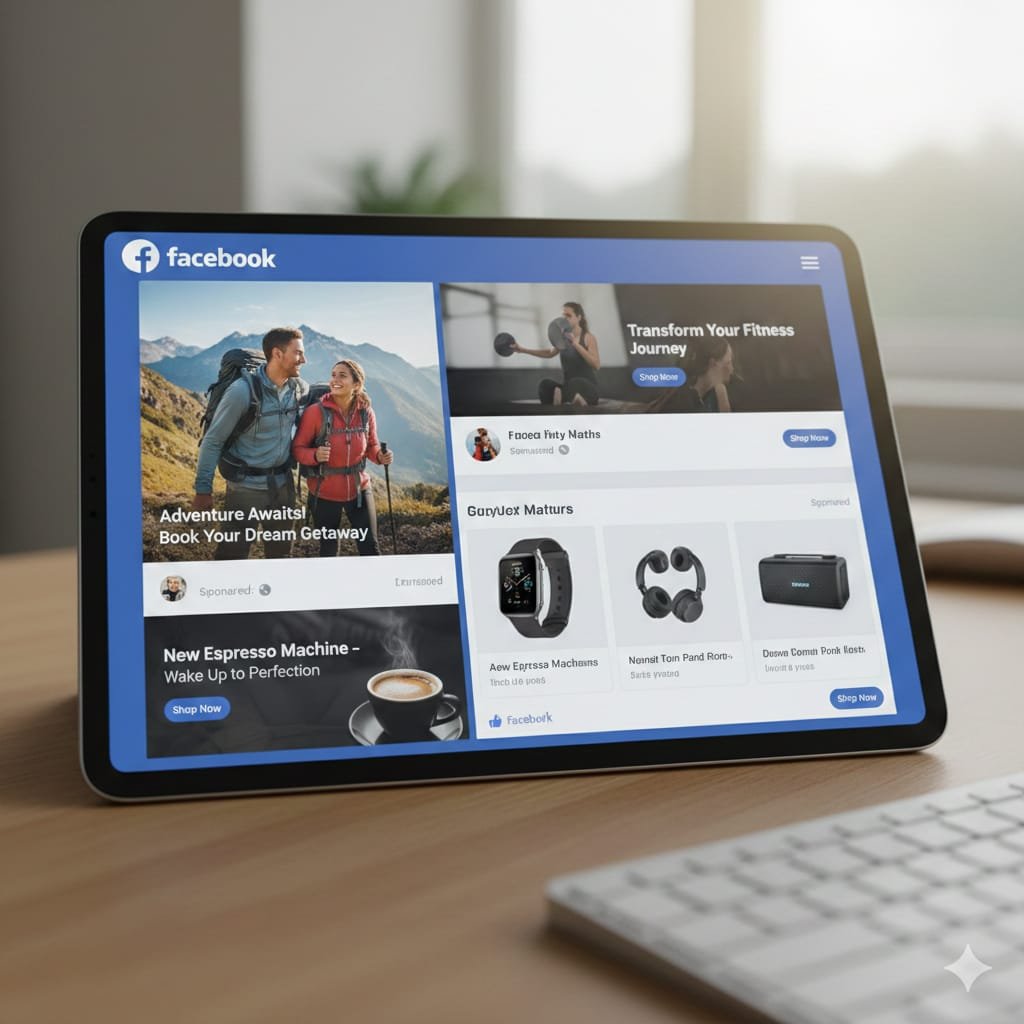
In 2026, the gap between “browsing” and “buying” on social media is nearly gone. Instagram Shops, TikTok Shop, and similar in-platform commerce features allow consumers to discover a product and purchase it without ever leaving their feed. Social media is no longer just a top-of-funnel awareness tool — it’s a full-funnel sales channel.
Community-Centric Marketing
The era of broadcasting to passive audiences is being replaced by community building. Brands invest in Discord servers, private Facebook Groups, brand-owned newsletters, and loyal creator partnerships. In 2026, consumers trust people over institutions — and the brands winning are those building authentic tribes, not just audiences.
Data Privacy and the Cookie-less Era
With third-party cookies largely phased out and privacy regulations tightening globally, social media marketers in 2026 are pivoting to first-party data strategies. Brands that have built direct relationships with their audiences — through email lists, loyalty programs, and engaged communities — hold a distinct competitive advantage.
Social Media as a Search Engine
A growing number of users — especially Gen Z and Gen Alpha — use TikTok, Instagram, and YouTube as their primary search engines. In 2026, social media SEO (optimizing content for in-platform search) has become a critical discipline, blurring the lines between traditional SEO and social strategy.
Mental Health, Ethics, and Authenticity
Consumers in 2026 are more sophisticated and more skeptical than ever. Overly polished content, fake reviews, and influencer dishonesty get called out publicly and quickly. The most successful brands lead with authenticity, purpose, and transparency. Marketing that ignores ethics doesn’t just fail — it blows up.
Traditional Marketing: Still Alive, But Evolved
It would be wrong to write traditional marketing’s obituary. Television, radio, and out-of-home advertising still command significant budgets — particularly for reaching older demographics and building mass brand recognition. The smart play in 2026 is an integrated strategy that combines the broad reach of traditional media with the precision, engagement, and real-time feedback of social media.
Think of a brand that runs a Super Bowl ad (traditional), then rides the conversation on X and TikTok for a week (social), then retargets viewers with personalized Instagram ads (paid social). Each channel amplifies the other.
Final Thoughts
The difference between social media marketing and traditional marketing isn’t just about platforms or technology — it’s about philosophy. Traditional marketing asks: “How do we reach people?” Social media marketing asks: “How do we connect with people?”
In 2026, the brands winning aren’t those with the biggest ad budgets — they’re the ones that understand culture, move fast, listen hard, and build genuine relationships with their audiences. Social media didn’t just change the tools of marketing; it changed what marketing fundamentally is.
The megaphone is still useful. But in 2026, the conversation is everything.
What do you think — is your brand leveraging social media to its full potential in 2026? Drop your thoughts in the comments below.
